Casimir Institute: Achieving more (than Moore) together
Accelerate sustainable chips and high-tech systems innovation from research to impact. That is the mission of the Casimir Institute. Launched on the 30th of September, 2025, the institute is a merger of the Eindhoven Hendrik Casimir Institute, the High Tech Systems Center, and the Future Chips Flagship. ‘By thinking and acting collectively rather than as individual researchers or groups, we can achieve more,’ says scientific director Bart Smolders.

6
Radical transformation
‘It is clear that we are on the verge of a radical transformation,’ Smolders starts telling the tale of how and why the institute came to life. ‘The scalability of the CMOS technology underlying our current digital society is reaching its limits. At the same time, there is an urgent need to come up with alternative solutions to create chips that deliver intelligence at a fraction of today’s energy use.’
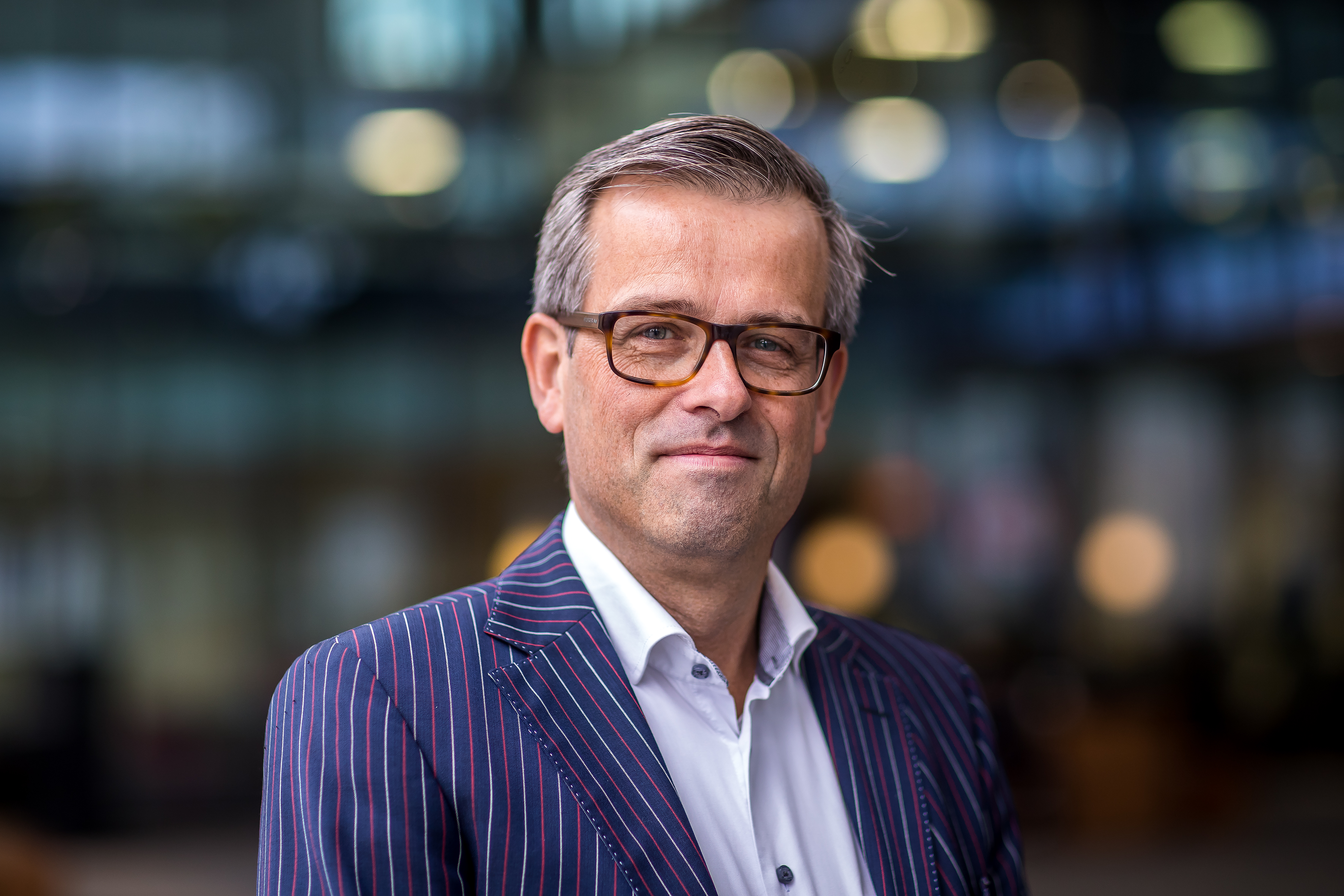
Bart Smolders
Scientific Director
The chips of the future will most likely be combining multiple technologies, such as electronics, photonics, and quantum technology. ‘As a university, we should be at the forefront of these developments, and pre-sort on what the world is going to need ten or twenty years from now,’ Smolders thinks. With the Casimir Institute, TU/e brings together all of the necessary expertise to lead the change.’
Evolution
The new institute is a logical result of an evolutionary process, he explains. ‘Some 2,5 years ago, I was asked to set up what later became the Future Chips Flagship. This virtual organization brought together all of our activities in the semiconductor field. Its aim was twofold: to improve the university’s visibility on this topic toward scientists, students and industrial partners, and to bring people together to define a joint vision on the future.’
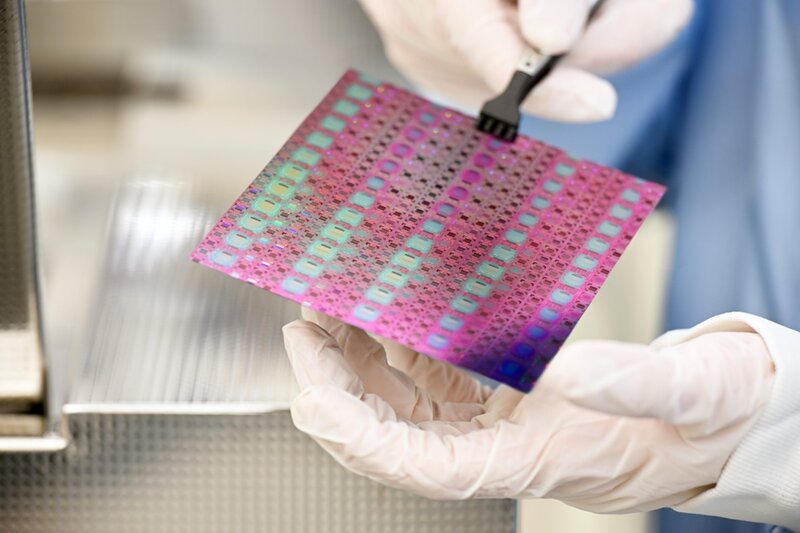
In the context of the Future Chips Flagship, Smolders’s team started collecting research targets. ‘We connected people with overlapping dreams and defined a research program with strategic partners, such as ASML, KU Leuven, NXP and IMEC on the interfaces between the topics.’ Around the same time, the Dutch government launched the Beethoven
project, which enables TU/e to hire 140 additional researchers on semiconductor-related topics. In order to align these types of large-scale initiatives and realize a one-stop-shop approach, TU/e’s Executive Board decided the time had come to bundle all of the university’s separate initiatives in this field in one institute.
Added value
As far as Smolders is concerned, the institute does not replace the existing research centers like the Center for Integrated Photonics Eindhoven, but aims to strengthen their activities and impact instead. ‘We mainly want to help them be more effective by mapping out interesting topics and funding opportunities, bringing people together, and helping in consortium formation and writing proposals for larger scale research programs.’
He takes photonics as an example. ‘Traditionally, Eindhoven has a strong track record in integrated photonics, going way back to the nineties of the previous century. Over the years, a tight community has been formed, which managed to develop an indium phosphide (InP) based platform containing all of the necessary building blocks for photonic chips. And they went beyond that, also started application-oriented initiatives which ultimately led to PhotonDelta and a thriving startup climate. In terms of technology development, now is the moment to start combining photonics with electronics. As one of the first steps toward heterogenous integration, we are trying to make transistors in indium phosphide, for example .’
Alignment
The Casimir Institute defined four research domains it wants to focus its attention on: Design and Integration, Materials and Processes, Equipment and Components, and Foundational Technologies. It is no coincidence that these domains align seamlessly with the ChipNL plans and the European Chips Act, Smolders explains. ‘For chip development, these are the accepted domains where innovations are needed. In our institute, we want to bring together people working on these different domains in joint projects to take the next steps in technology development.’
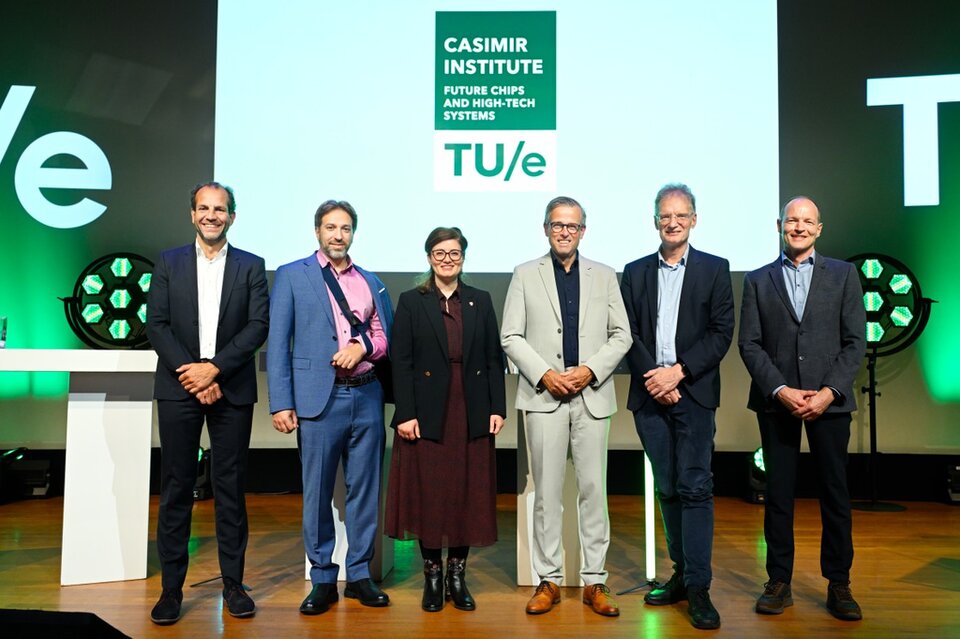
The management team of the Casimir Institute. From left to right: Erwin Kessels, Víctor Sánchez Martín, Aida Todri-Sanial, Bart Smolders, Joost Kok and Olaf van der Sluis. Photo: Bart van Overbeeke
One of the first and most visible results of the university’s chip-related efforts will be the new cleanroom that is to be built on the TU/e campus, he says. ‘In terms of labs, that will be a giant leap forward. Not only will the new cleanroom be substantially bigger than the one we have now in Spectrum, but it will also contain a dedicated area for students to gain hands-on experience with cleanroom practices. And in the adjacent new office building, researchers working on different aspects of chip technology will be physically brought together, facilitating new collaborations.’
Because in the end, collaboration is the keyword, Smolders states. ‘That is and will aways be the unique strength of this region. And that is also why I am convinced that as TU/e, we will be making a distinct mark on our future digital society. Simply because by not competing with each other but by thinking from a collective point of view, you can achieve more.’
Because in the end, collaboration is the key word, Smolders states. ‘That is and will aways be the unique strength of this region. And that is also why I am convinced that as TU/e, we will be making a distinct mark on our future digital society.’